Key Takeaways
- Direct trustee-to-trustee transfers typically complete in 1-3 weeks, while indirect rollovers can take up to 3 months due to additional verification processes
- Incomplete paperwork is the #1 cause of Gold IRA transfer delays, accounting for nearly 40% of extended timelines
- Choosing a custodian with streamlined electronic processing can cut your transfer time in half compared to those still using paper-based systems
- The type of transfer (401(k) to Gold IRA vs. IRA to Gold IRA) significantly impacts your timeline, with 401(k) rollovers taking 60-90 days on average
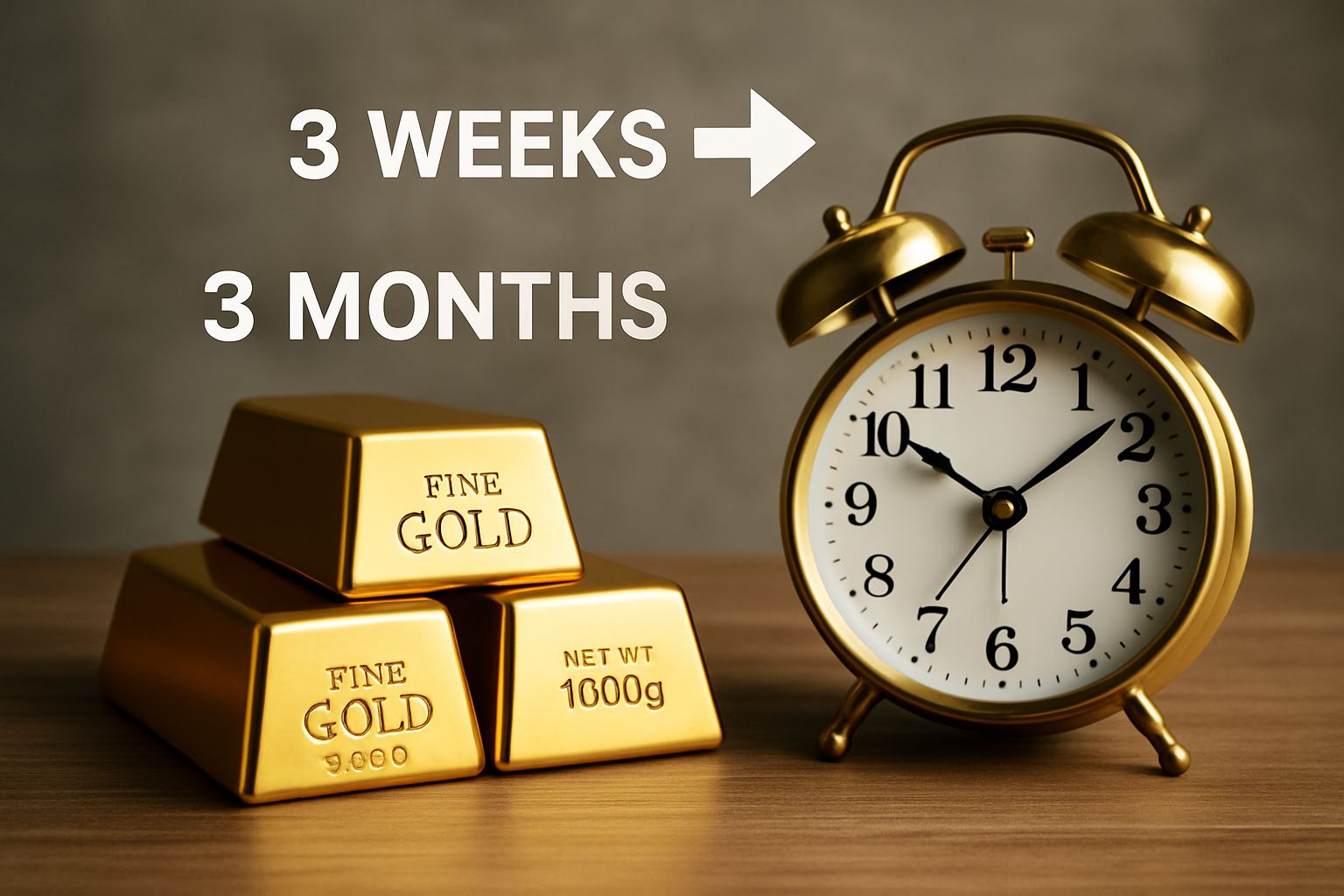
Gold IRA transfers can take anywhere from 3 weeks to 3 months to complete. That's a massive difference when you're trying to protect your retirement funds from market volatility. Understanding why these timelines vary so dramatically is crucial for anyone looking to diversify with precious metals without unnecessary delays.
Article-at-a-Glance
When converting retirement funds to physical gold, timing matters. The difference between a smooth three-week transfer and a frustrating three-month ordeal often comes down to understanding the process and avoiding common pitfalls. This comprehensive guide breaks down exactly why some Gold IRA transfers sail through quickly while others get bogged down for months. You'll discover the critical factors that determine your timeline and specific strategies to ensure your retirement funds transition as efficiently as possible.
The Shocking Truth About Gold IRA Transfer Delays
The hard truth most Gold IRA companies won't tell you upfront: the "typical" 1-3 week timeline they advertise applies only under ideal conditions. According to industry data, nearly 40% of Gold IRA transfers actually take longer than 30 days to complete. The disconnect happens because many factors outside the Gold IRA company's control can significantly impact your timeline. Understanding these variables before you begin can save you considerable frustration and potentially thousands in opportunity costs.
What makes the difference between a swift transfer and a months-long ordeal? The process involves multiple parties - your current custodian, your new Gold IRA custodian, sometimes your plan administrator, the IRS, and the precious metals dealer. Each link in this chain creates potential for delays. The most efficient transfers occur when all parties are aligned with clear communication channels and when you've properly prepared your documentation.
Why Most Investors Face Unexpected Waiting Periods
Most investors initiate Gold IRA transfers with unrealistic timeline expectations. The glossy marketing materials promising "quick and easy" transfers rarely account for real-world complications. Your current retirement account custodian has little financial incentive to process your outgoing transfer quickly - in fact, they're losing assets under management. This fundamental misalignment of interests often results in your current custodian taking the maximum allowed time (often 30+ days) to process your request.
Additionally, many investors don't realize that different types of retirement accounts have vastly different transfer timelines. A 401(k) rollover from a former employer can take 60-90 days, while a transfer between two self-directed IRAs might complete in just 2-3 weeks. This discrepancy creates significant confusion when investors compare notes or read about average processing times online.
The Critical Factors That Determine Your Timeline
Four key variables determine whether your Gold IRA transfer will be measured in weeks or months. First, the type of transfer you're conducting (direct vs. indirect) has massive timeline implications. Direct trustee-to-trustee transfers eliminate the 60-day rollover window but often take longer to initiate. Second, your current custodian's internal processes and technological capabilities significantly impact processing speed - some still rely on physical mail for verification! Third, the completeness and accuracy of your initial paperwork submission can make or break your timeline. Finally, the efficiency of your new Gold IRA custodian in processing incoming transfers and purchasing metals affects the final stages of your timeline.
Understanding these variables puts you in the driver's seat. By strategically managing each factor, you can potentially cut weeks or even months off your transfer timeline. The difference between waiting 21 days versus 90+ days often comes down to decisions entirely within your control.
The 3-Week Fast Track: What Makes Some Transfers So Quick
The fastest Gold IRA transfers share several common characteristics. These "unicorn" transfers typically involve modern custodians with electronic processing capabilities, straightforward account types, and investors who have meticulously prepared their documentation. When all these elements align, the entire process can indeed complete in as little as 3 weeks (sometimes even faster). Understanding what makes these transfers so efficient gives you a blueprint for optimizing your own timeline.
Multiple Account Consolidation Challenges
When consolidating multiple retirement accounts into a single Gold IRA, the complexity increases exponentially. Each source account requires its own transfer paperwork, verification process, and timeline tracking. For investors with funds spread across several 401(k)s, IRAs, and other qualified plans, this can create a logistical nightmare that extends the overall timeline significantly.
The key challenge lies in synchronizing these transfers to arrive at your new custodian within a reasonable timeframe. Some investors report waiting over 120 days when consolidating 3+ accounts, as each source custodian operates on their own schedule. This desynchronization can leave portions of your retirement funds in limbo – neither invested in their original accounts nor yet available for precious metals purchases.
Your Transfer Type Makes All The Difference
Not all Gold IRA transfers are created equal. The specific type of account you're transferring from fundamentally determines your timeline, regardless of how efficiently you complete paperwork or which Gold IRA company you choose. Understanding these inherent timeline differences helps set realistic expectations and allows for better retirement planning.
The processing requirements, verification steps, and regulatory oversight vary dramatically between different retirement account types. This creates a hierarchy of transfer complexity that directly impacts how long you'll wait before your precious metals are secured in your IRA vault.
These timeline differences stem from the underlying regulatory frameworks governing each account type. For instance, employer-sponsored plans like 401(k)s have additional ERISA requirements and fiduciary responsibilities that necessitate more extensive verification procedures than self-directed IRAs.
Transfer Type Comparison
401(k) to Gold IRA: 60-90 days average
Traditional IRA to Gold IRA: 30-45 days average
Gold IRA to Gold IRA: 14-21 days average
Note: Timelines assume complete paperwork and responsive custodians
The financial industry has created these distinct processing timelines largely due to risk management and fraud prevention protocols. Longer verification periods for larger accounts or employer-sponsored plans reflect the higher scrutiny these transfers receive, not necessarily inefficiency in the process itself.
401(k) to Gold IRA: The Longest Timeline (60-90 Days)
Transferring from a 401(k) represents the most time-intensive process, particularly if the account is with a current employer. These transfers require plan administrator approval, extensive verification, and often multiple rounds of paperwork. Many 401(k) administrators still rely on physical mail for transfer requests, adding weeks to the timeline. Additionally, most 401(k) plans require complete liquidation of existing investments before transfer, creating further delays as market orders execute and settle.
Traditional IRA to Gold IRA: Medium Timeline (30-45 Days)
Traditional IRA transfers move somewhat faster than 401(k) rollovers but still face significant processing time at the existing custodian. Most major financial institutions have a 2-3 week internal processing period for outgoing transfers, which they rarely expedite regardless of customer requests.
The verification procedures for IRA transfers are less stringent than for 401(k) rollovers, but still require identity confirmation and account ownership validation. Many traditional IRA custodians still use partially manual processes that add unnecessary days to the timeline.
A critical factor affecting traditional IRA transfer timelines is whether your existing investments need liquidation before transfer. Cash transfers typically move 7-10 days faster than transfers requiring security sales, especially if those securities have settlement periods or limited trading windows.
Gold IRA to Gold IRA: The Fastest Option (14-21 Days)
The most efficient transfer scenario occurs between two self-directed precious metals IRAs. These specialized custodians understand the process intimately and often have streamlined systems specifically designed for precious metals transfers. In-kind transfers of existing precious metals (where the physical metals move between vaults rather than being liquidated) can sometimes complete in as little as two weeks.
This accelerated timeline exists because both custodians in a Gold IRA to Gold IRA transfer are familiar with the specialized documentation and storage requirements for precious metals. There's no need to explain or justify the transfer to custodians unfamiliar with alternative assets, eliminating a common friction point in other transfer types.
The Hidden Timeline Killers Most Advisors Won't Tell You
Beyond the obvious factors affecting transfer times, several hidden variables can dramatically impact your timeline without warning. These "timeline killers" rarely appear in marketing materials but account for many of the most frustrating delays investors experience when establishing Gold IRAs.
Understanding these less obvious delay factors helps you navigate around them or at least prepare for their potential impact. Many can be mitigated through careful planning and strategic timing of your transfer request.
Custodian Business Hours and Processing Schedules
Most custodians process transfers in batches on specific days of the week or month. Submitting your paperwork just after a processing deadline can add up to two weeks to your timeline. Additionally, many custodians have reduced staff for transfer processing during tax season (January through April), creating significant backlogs that affect all transfer requests.
The industry secret is that most custodians operate with limited transfer department hours that don't align with their advertised customer service availability. A transfer request received at 3pm on Friday likely won't begin processing until Tuesday of the following week at many institutions.
Custodian Processing Schedule Impact
Most favorable submission: Monday-Tuesday morning
Least favorable submission: Thursday-Friday afternoon
Annual slowdown periods: January-April (tax season), December (holiday season)Understanding your existing custodian's internal processing schedule can help you time your submission strategically. Some investors report success by submitting paperwork early in the week and following up with a phone call to confirm receipt before the week's processing deadline.
Similarly, many custodians experience seasonal processing delays that aren't reflected in their standard timeline estimates. Tax season (January through April) and year-end (November through December) typically see processing times extend by 25-50% due to increased department workloads and staff vacations.
Metal Price Volatility Effects on Processing
During periods of significant precious metals price volatility, many Gold IRA companies and custodians experience processing backlogs as transfer volume increases dramatically. This counter-intuitive delay happens because market volatility drives more investors to seek the perceived safety of gold, creating a surge in transfer requests that overwhelms normal processing capacity.Some Gold IRA specialists have been known to prioritize larger transfers during these high-volume periods, meaning smaller accounts may experience longer delays. Additionally, dramatic price movements in gold and silver can trigger verification holds on metals purchases as dealers implement additional fraud prevention measures during volatile markets.
Funding Methods and Verification Times
How you fund your Gold IRA significantly impacts your timeline. Wire transfers typically clear in 1-2 business days, while checks can take 5-10 business days to clear before metals purchases can be initiated. Many investors don't realize this distinction when completing their transfer paperwork, inadvertently selecting the slower funding method.Some custodians also impose mandatory holding periods on incoming funds before allowing metals purchases, particularly for new accounts or larger transfers. These verification holds rarely appear in marketing materials but can add 3-5 business days to your timeline after funds have already arrived at your new custodian.
How to Cut Your Gold IRA Setup Time in Half
Despite the various factors that can extend Gold IRA transfer timelines, strategic preparation and execution can dramatically reduce your wait time. Implementing the following optimization strategies has helped investors slash weeks or even months off their transfer timelines.
1. Choose the Right Gold IRA Company
The single most important timeline factor within your control is selecting a Gold IRA company with proven processing efficiency. Look for companies that offer dedicated transfer specialists who handle all paperwork and communication between custodians. Augusta Precious Metals stands out in this regard, with their team of IRA specialists who manage the entire transfer process from start to finish, often resulting in completion times 30-40% faster than industry averages.
2. Prepare Your Documentation Package
Assemble all required documentation before initiating your transfer. This includes recent statements from your existing accounts, government ID, social security number, beneficiary information, and contact details for your current custodian. Having this complete package ready at the outset can eliminate multiple rounds of follow-up requests that typically add 7-14 days to the process.
3. Follow Up Strategically
Establish a proactive follow-up schedule with both your current and new custodians. Mark your calendar for strategic check-ins at key points in the process – typically 5 business days after submission, 10 business days after submission, and then weekly until completion.These follow-ups serve two critical purposes: they keep your transfer top-of-mind for custodian representatives who may be handling hundreds of requests, and they quickly identify any paperwork issues or information gaps before they cause extended delays.Most importantly, document each conversation with names, dates, and promised timelines. Having this detailed record allows you to escalate effectively if needed, often by simply referencing previous conversations to create accountability.
- Call early in the day when representatives are less rushed
- Request specific next steps and timeframes during each call
- Ask for direct contact information for your case processor
- Consider requesting supervisor review for transfers exceeding promised timelines
- Send follow-up emails summarizing phone conversations to create a paper trail
4. Consider a Partial Transfer First
For investors with larger portfolios, starting with a partial transfer can provide valuable experience with the process while limiting exposure to delays. A smaller initial transfer (perhaps 10-20% of your intended allocation) helps you identify custodian-specific quirks and establish a relationship with your new Gold IRA company before moving your primary funds.This strategy effectively creates a "test run" that reveals potential bottlenecks in your specific situation. You can then apply these lessons when transferring the remainder of your funds, potentially saving weeks of delay on your larger transfer.Partial transfers also provide psychological benefits, allowing you to begin your precious metals position while the remainder of your funds are still in transit. This reduces the stress of having your entire retirement portfolio in limbo during an extended transfer period.
5. Avoid These Common Application Mistakes
The most common application mistakes that extend Gold IRA transfer timelines are surprisingly simple to avoid. These include missing signatures (particularly spousal signatures when required), outdated account statements, incomplete custodian information, and failure to include required identification documents. Taking an extra 15 minutes to double-check your application package against a comprehensive checklist can save weeks of back-and-forth corrections.Another critical mistake is mismatched information across different forms. Ensure your name, address, social security number, and account numbers are identically formatted on all documents. Even minor discrepancies like using "Street" versus "St." can trigger verification holds at some custodians. Be especially careful with account numbers from your existing retirement accounts – a single transposed digit can derail your entire transfer.
The Complete Gold IRA Transfer Timeline: What to Expect
Understanding the complete Gold IRA transfer timeline helps set realistic expectations and allows you to plan effectively around the transition period. While individual circumstances vary, most Gold IRA transfers follow a predictable four-phase process with relatively consistent timing for each stage. Being aware of these phases lets you track progress more effectively and identify abnormal delays that might require intervention.
Phase 1: Application and Account Opening (3-7 Days)
The initial phase involves completing and submitting your new Gold IRA application, transfer request forms, and supporting documentation. During this period, your new custodian verifies your identity, establishes your account, and prepares to receive funds. The most efficient Gold IRA companies can complete this phase in as little as 3 business days if you provide complete documentation upfront. Delays typically occur when identification verification fails initial automated checks or when paperwork requires corrections – both issues that careful preparation can minimize.
Phase 2: Transfer Request and Processing (7-60 Days)
This represents the longest and most variable phase of the process. Your new custodian submits a formal transfer request to your existing retirement account custodian, who then initiates their internal verification and processing procedures. Timeframes vary dramatically based on the type of account being transferred, your existing custodian's processes, and current processing volumes.During this waiting period, your existing custodian may need to liquidate investments, verify the transfer request through additional security measures, and prepare the funds for transmission. Many investors find this phase particularly frustrating because it offers limited visibility and few opportunities for intervention.The wide timeline variance here (7-60 days) primarily depends on your existing custodian's efficiency and the complexity of your current account. Simple cash transfers from already self-directed IRAs might complete in just 7-10 days, while employer-sponsored plans with invested assets might require the full 60 days or even longer.One important note: this phase may include a mandatory 10-day holding period after your existing account assets are liquidated but before they're transferred. This industry-standard security measure prevents potential fraud but adds significant time to many transfers.
Phase 2 Timeline Variations by Account Type
Self-Directed IRA (cash): 7-14 days
Traditional IRA (invested): 21-30 days
Roth IRA: 21-30 days
401(k) from former employer: 30-60 days
403(b)/457 Plans: 30-60 days
TSP/Government plans: 45-60+ daysPhase 3: Funds Clearing and Metal Purchase (2-7 Days)
Once funds arrive at your new Gold IRA custodian, they typically require 1-2 business days to clear before metals purchases can be authorized. Your Gold IRA company then executes your precious metals purchase according to your investment strategy. The purchase execution itself usually takes 1-3 business days depending on market conditions, dealer inventory, and order size. Larger orders sometimes require multiple dealers to fulfill, adding time to this phase. Throughout this process, your Gold IRA company should provide updates on order status and expected delivery timeframes.
Phase 4: Delivery and Storage Confirmation (3-5 Days)
The final phase involves the secure transport of your purchased metals to your designated IRA depository and confirmation of receipt and storage. Most depositories process incoming shipments within 24-48 hours of receipt, followed by inventory verification and storage allocation. Once complete, you'll receive final confirmation that your Gold IRA transfer is officially complete. This phase rarely experiences significant delays unless you've purchased rare or unusual products that require additional verification procedures beyond standard bullion.
Take Control of Your Gold IRA Timeline Today
While certain aspects of the Gold IRA transfer timeline remain outside your direct control, implementing the strategies outlined in this guide can significantly reduce your waiting time and minimize frustration. The most successful transfers combine thorough preparation, strategic timing, consistent follow-up, and partnership with an experienced Gold IRA specialist who understands the nuances of the process. By approaching your Gold IRA transfer with this structured methodology, you can potentially save weeks or even months compared to the average investor experience.Remember that protecting your retirement funds with precious metals represents a long-term strategy, not a short-term reaction to market conditions. A few extra weeks in the transfer process is a small price to pay for the decades of protection and potential growth that a properly structured Gold IRA can provide.
Frequently Asked Questions
The following questions address common concerns about Gold IRA transfer timelines and provide specific strategies for addressing potential delays. While individual circumstances vary, these general guidelines apply to most transfer scenarios and can help you navigate the process more effectively.
Can I speed up my Gold IRA transfer if the market is volatile?
Market volatility actually tends to slow down Gold IRA transfers rather than accelerate them, as processing systems become overwhelmed with increased transfer volume. However, you can potentially mitigate these delays by submitting your paperwork early in the business week, following up frequently with both custodians, and considering a wire transfer rather than check for the final funds movement. Some investors also report success by requesting supervisor escalation if their transfer exceeds the custodian's stated processing timeframe during volatile periods.It's worth noting that attempting to time the market with your Gold IRA transfer rarely produces optimal results. The administrative timelines involved make precise timing nearly impossible, and the long-term benefits of precious metals ownership generally outweigh short-term price fluctuations. Focus instead on ensuring your transfer proceeds as efficiently as possible regardless of current market conditions.
Is it better to do a direct or indirect rollover for faster processing?
Direct transfers (trustee-to-trustee) generally provide more consistent timelines than indirect rollovers, despite sometimes taking longer to initiate. While an indirect rollover puts funds in your hands faster initially, it creates significant time pressure due to the strict 60-day redeposit requirement and introduces tax withholding complications that may delay your metals purchase.For most investors, direct transfers represent the safer option from both a timeline and tax perspective. The predictable (if sometimes slower) processing timeline eliminates the risk of missing the 60-day window, which would trigger taxes and penalties. Additionally, direct transfers allow you to move 100% of your retirement funds rather than only 80% if tax withholding applies to your indirect rollover.The one exception might be for investors with exceptionally unresponsive current custodians who have a history of delaying outgoing transfers. In these rare cases, an indirect rollover might provide more control over the timeline, provided you're confident in your ability to complete the process within the 60-day window.
What documentation typically causes the most delays in Gold IRA transfers?
Missing or incomplete beneficiary designations represent the single most common documentation issue that delays Gold IRA transfers. Many investors fail to provide contingent beneficiary information or neglect to include required information like beneficiary social security numbers and birth dates. Other problematic areas include outdated identification documents, missing notarizations when required (particularly for transfers exceeding certain dollar thresholds), and incomplete existing account information that prevents proper verification of the source funds.
How do different custodians compare in processing timelines?
Custodian processing times vary dramatically based on their technological infrastructure and business model. Traditional financial institutions like major banks and brokerages typically have the longest processing times for outgoing transfers, often 30+ days, as they have little incentive to expedite the movement of assets away from their management. Specialized self-directed IRA custodians generally process transfers more efficiently, with average timelines of 14-21 days, particularly when both the sending and receiving custodians specialize in alternative assets like precious metals.The most significant differences appear in the technology platforms used for verification and processing. Custodians with fully digital processing systems typically complete transfers 40-60% faster than those still relying on physical mail and manual verification procedures. When selecting a new Gold IRA custodian, prioritize those with electronic processing capabilities, dedicated transfer departments, and specific experience with precious metals IRAs.
Will transferring physical gold I already own make the process faster or slower?
Transferring existing physical gold into a new Gold IRA (rather than cash) typically extends the timeline by 7-14 additional days. This happens because your existing metals must undergo verification for IRA eligibility, authentication, and often assay testing to confirm purity standards meet IRS requirements. Many common retail gold products don't meet the minimum .9999 fineness standard required for IRA inclusion, necessitating liquidation and repurchase of qualifying products.Additionally, transferring physical metals requires specialized shipping, insurance, and chain-of-custody documentation not needed for cash transfers. The receiving depository must then verify each piece against provided documentation and issue formal acceptance before the transfer completes. For these reasons, most investors find it more efficient to transfer cash and purchase IRA-eligible metals through their Gold IRA company rather than attempting to transfer existing physical metals.
IRA-Eligible Precious Metals Requirements
Gold: Minimum .9999 fineness (24 karat)
Silver: Minimum .999 fineness
Platinum: Minimum .9995 fineness
Palladium: Minimum .9995 fineness
All metals must be produced by an approved refiner/mint
No numismatic or collectible coins allowed. For more information, you can explore Gold IRA rollover options.The precious metals market offers a rare opportunity to secure retirement funds against inflation and economic uncertainty. While the transfer process may seem daunting, the protection offered by physical gold and silver has proven its value throughout history. Taking the time to properly structure your Gold IRA today creates long-term security that paper assets simply cannot match.Understanding the timeline factors detailed in this guide puts you ahead of most investors and positions you to complete your Gold IRA transfer with minimal delays. Remember that the temporary inconvenience of the transfer process is ultimately insignificant compared to the decades of protection your precious metals IRA can provide.