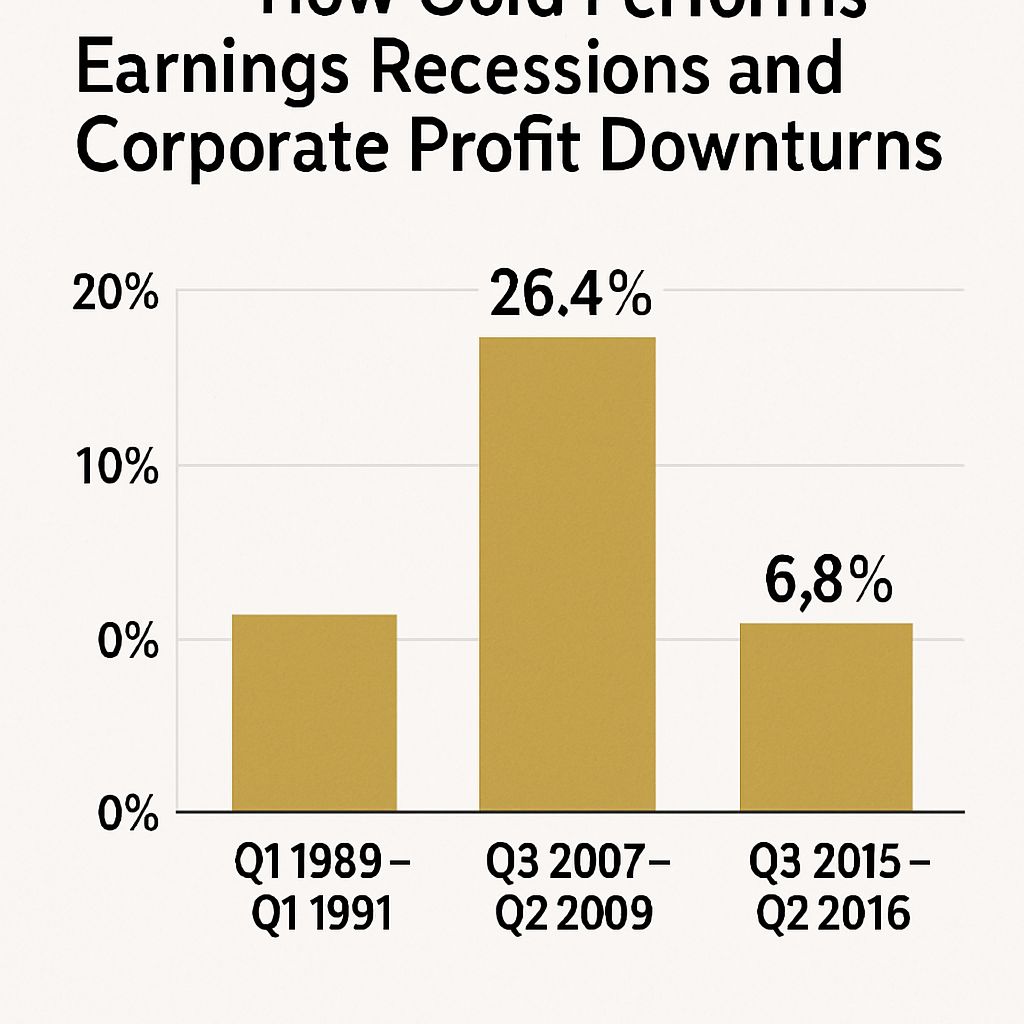
When corporate profits begin to slide and earnings recessions loom, investors instinctively search for safe harbors. History provides compelling evidence for why gold deserves serious consideration during these turbulent economic periods.
Gold's remarkable performance during times of economic stress isn't merely coincidental. The precious metal has demonstrated a consistent pattern of strength precisely when corporate profits falter and broader market indices struggle. This relationship offers critical insights for investors seeking to protect and potentially grow their wealth during challenging economic conditions.
Why Gold Shines When Corporate Profits Fall
Gold possesses unique characteristics that become particularly valuable during earnings recessions. Unlike stocks and corporate bonds whose values are directly tied to company performance, gold operates independently of balance sheets and income statements. This fundamental separation from corporate profit cycles provides a natural hedge when earnings begin to contract across the broader market.
The precious metal's inherent scarcity and physical properties have established it as a store of value for thousands of years. When paper assets face pressure from declining profits, investors often rediscover gold's enduring appeal. This flight to quality tends to accelerate as earnings disappointments multiply across sectors, creating a self-reinforcing price support mechanism.
Additionally, central banks typically respond to earnings recessions with accommodative monetary policies, including interest rate cuts and quantitative easing. These measures reduce the opportunity cost of holding non-yielding assets like gold and often lead to currency devaluation concerns, further strengthening gold's appeal as a monetary alternative during these periods.
"During times of recession and depression, the price of gold usually rises as demand is driven up by investors keen to diversify their portfolios and spread their risk." - Bullion By Post Market Analysis
Historical Gold Performance During Earnings Recessions
The historical record speaks volumes about gold's resilience during economic contractions. Looking at data from the National Bureau of Economic Research (NBER) recession index, a clear pattern emerges across multiple business cycles. From 1973 to present, gold has consistently delivered positive returns during recessionary periods, often dramatically outperforming traditional equity markets.
Average Returns During Past 7 US Recessions
Examining the seven U.S. recessions since 1973 reveals gold's remarkable countercyclical properties. From six months before the official start of a recession to six months after its conclusion, gold has returned an average of 28%. This performance stands in stark contrast to the struggles typically experienced by equities and corporate bonds during these same timeframes. The consistency of this pattern across different economic eras and varying recession severities underscores gold's reliability as a portfolio stabilizer.
Gold vs. S&P 500 Performance Comparison
The outperformance gap between gold and equities becomes particularly striking during earnings recessions. While the S&P 500 has historically struggled during these periods, gold has outpaced the index by an average of 37% across the seven recessions studied. This differential was most dramatic during severe downturns like the 2007-2009 Financial Crisis, when gold gained 25% while the S&P 500 plummeted by more than 50% – a performance gap of 75 percentage points.
During the energy crisis and inflation shocks from 1976 to 1978, gold increased by 53% while the S&P 500 declined by nearly 20%. Even in the aftermath of Black Monday in 1987, gold managed a 6% gain while equities experienced a dramatic 33% drop. These examples illustrate gold's tendency to not merely preserve capital during earnings contractions but potentially deliver substantial positive returns.
Gold Mining Stocks' Exceptional Outperformance
For investors seeking amplified exposure to gold's recession-resistant properties, gold mining equities offer an intriguing option. During the same recessionary periods examined, gold mining stocks have generated even more impressive returns than physical gold, averaging 61% and outperforming the S&P 500 by 69%. This outperformance stems from the operational leverage inherent in mining companies, where relatively small increases in gold prices can translate to significantly larger improvements in profitability.
However, this enhanced performance potential comes with additional considerations. Unlike physical gold, mining companies face operational risks, management decisions, and country-specific challenges that can impact returns. Last year demonstrated this vulnerability as gold producer profit margins were squeezed between rising input costs (oil, steel, labor) and falling gold prices, causing producer equities to underperform bullion in U.S. dollar terms.
What Drives Gold's Strength in Economic Downturns
Understanding the mechanics behind gold's resilience during earnings recessions requires examining multiple economic factors that converge during these periods. While correlation doesn't always equal causation, the consistent pattern observed across decades suggests powerful underlying relationships at work.
Gold's performance during corporate profit downturns isn't random - it's rooted in fundamental market dynamics that repeatedly manifest when earnings begin to contract. By recognizing these patterns, investors can make more informed decisions about incorporating gold into their recession-resistant strategies.
Safe-Haven Asset Status
Gold's reputation as a safe-haven asset becomes particularly valuable when corporate earnings begin to deteriorate. As profit warnings increase and guidance is revised downward, market confidence typically erodes, triggering risk-aversion behaviors. This psychological shift drives capital toward assets perceived as stable stores of value, with gold being among the primary beneficiaries of this flight to quality.
Unlike corporate securities whose values are directly linked to future earnings potential, gold stands apart from the profit cycle. This independence from balance sheet considerations provides a crucial diversification benefit precisely when correlation among traditional financial assets tends to increase. The metal's 5,000-year history as a recognized store of value further reinforces investor confidence during uncertain economic periods.
Central Bank Policies and Gold Prices
Central banks typically respond to earnings recessions with stimulative monetary policies designed to stabilize markets and support economic activity. These measures often include interest rate cuts, quantitative easing, and expanded liquidity provisions. Such policies create several tailwinds for gold prices that help explain its consistent outperformance during these periods.
First, lower interest rates reduce the opportunity cost of holding non-yielding assets like gold. Second, expansionary monetary policies frequently raise concerns about future inflation or currency debasement, enhancing gold's appeal as a monetary alternative. Finally, central bank balance sheet expansion increases systemic liquidity, some of which inevitably finds its way into precious metals markets as investors seek portfolio diversification.
Correlation Between Corporate Profit Declines and Gold
Data analysis reveals an interesting inverse relationship between corporate profit trends and gold performance. When aggregate earnings growth turns negative, gold has historically begun its strongest performance phase. This counter-cyclical pattern becomes especially pronounced when earnings contractions exceed 10% year-over-year, suggesting a threshold effect in investor behavior.
The correlation coefficient between S&P 500 earnings growth and gold price movements has averaged -0.42 during recessionary periods, indicating a moderately strong negative relationship. This mathematical relationship provides quantitative support for gold's reputation as a portfolio hedge during times of corporate distress.
Gold Price Behavior in Different Recession Types
Not all economic downturns impact gold in identical ways. The nature, severity, and policy responses to different recessions create varying environments for gold performance. Examining specific historical episodes provides valuable context for understanding these nuances.
Mild vs. Severe Recessions
Gold's outperformance tends to be more dramatic during severe economic contractions than during milder slowdowns. When corporate profits experience shallow, short-lived declines, gold typically delivers modest positive returns but may not substantially outpace other defensive assets. However, during deep, prolonged earnings recessions, gold's relative advantage becomes far more pronounced as systemic concerns intensify and traditional safe havens come under pressure.
This pattern reflects gold's unique position as both a commodity and a monetary asset. In mild downturns, its monetary properties provide modest support. But when serious economic stresses emerge, both its monetary and crisis insurance characteristics combine to drive substantial outperformance.
2. Dot-Com Bubble (2001): Mixed Performance
The aftermath of the dot-com bubble offers an instructive case study in gold's behavior during a technology-led earnings recession. As corporate profits contracted following the collapse of speculative internet stocks, gold initially demonstrated only modest strength, gaining approximately 5% during the official recession period. This relatively muted response reflected the sector-specific nature of the downturn and the strong U.S. dollar environment maintained through the early stages of the contraction.
However, gold's performance strengthened considerably in the years following the recession as the Fed maintained accommodative policies and geopolitical uncertainties mounted after September 11th. This delayed but powerful move highlights how gold can sometimes lag at the onset of an earnings recession but accelerate as policy responses unfold and longer-term implications become apparent.
3. Early 1990s Recession: Challenged by Central Bank Sales
The early 1990s recession presents an interesting counterpoint where gold faced headwinds despite an earnings contraction. During this period, several central banks, particularly European institutions, engaged in significant gold sales as part of portfolio rebalancing efforts. These official sector sales created supply pressure that partially offset the typical safe-haven demand that emerges during profit downturns.
Additionally, the relatively quick recovery in corporate profits following this recession limited the duration of gold's favorable environment. This example illustrates how external factors such as central bank activities can temporarily modify gold's usual recession-resistant properties, though not eliminate them entirely.
Gold Equities: A Leveraged Play on Gold During Downturns
For investors seeking amplified exposure to gold's counter-cyclical properties, gold mining stocks represent a powerful alternative to direct bullion ownership. These equities combine operational leverage to gold prices with corporate characteristics that can dramatically outperform physical gold during earnings recessions, though with additional risk factors to consider.
61% Average Return During Recessions
The data tells a compelling story about gold mining stocks during economic contractions. Across the seven U.S. recessions analyzed, gold equities delivered an average return of 61% from six months before the recession's start to six months after its conclusion. This remarkable performance exceeded even physical gold's strong returns and outpaced the S&P 500 by a staggering 69 percentage points on average.
This outperformance stems from the fundamental business model of mining companies. When gold prices rise during recessions, mining firms experience expanding profit margins as their production costs remain relatively stable while their output commands higher market prices. This operational leverage creates a multiplier effect on earnings that typically drives share prices higher at an accelerated rate compared to the underlying metal.
Operational Improvements in Mining Companies
Today's gold mining companies have significantly improved their operational efficiency compared to previous decades. Many have streamlined their cost structures, reduced debt levels, and implemented more disciplined capital allocation strategies. These improvements have created more financially robust businesses that can better withstand market volatility while potentially delivering enhanced shareholder returns during gold price increases.
Additionally, technological advancements in exploration, extraction, and processing have allowed mining companies to operate more efficiently. Automated equipment, improved recovery techniques, and better ore body modeling contribute to more predictable production costs, enhancing the leverage effect when gold prices rise during earnings recessions.
Risk Factors Specific to Mining Stocks
Despite their impressive historical performance during recessions, gold mining stocks come with unique risk considerations that investors should carefully evaluate. Unlike physical gold, mining companies face operational challenges including production disruptions, regulatory changes, labor disputes, and resource depletion. These company-specific risks can sometimes overwhelm the positive impact of rising gold prices, creating performance divergence within the sector even as the underlying metal advances.
When Gold Doesn't Follow The Pattern
While gold's track record during earnings recessions is compelling, it's essential to acknowledge exceptions to the pattern. Understanding these anomalies provides valuable perspective on the limitations of gold's counter-cyclical properties and helps investors set appropriate expectations.
No investment relationship is perfect, and even gold's strong recession performance record includes periods where the expected outperformance failed to materialize fully. These exceptions often occurred due to specific monetary conditions or market dynamics that temporarily disrupted gold's typical safe-haven function.
By examining these exceptions alongside the more common pattern of outperformance, investors can develop a more nuanced understanding of gold's behavior across different economic scenarios and improve their allocation decisions accordingly.
The 1981 Recession Exception
The recession of 1981-1982 represents the most significant exception to gold's typically strong recession performance. During this period, gold prices actually declined despite a severe earnings contraction across the broader economy. This anomalous behavior stemmed primarily from the unique monetary policy environment created by Federal Reserve Chairman Paul Volcker's aggressive campaign to combat inflation.
Interest rates reached unprecedented levels during this period, with the federal funds rate peaking above 20%. These extraordinarily high rates significantly increased the opportunity cost of holding non-yielding gold, creating substantial headwinds despite the recessionary environment. This example illustrates how extreme monetary policy can temporarily override gold's typical recession-resistant characteristics.
Impact of Monetary Policy Responses
The relationship between monetary policy choices and gold's recession performance deserves special attention. Historical data suggests gold performs best during recessions accompanied by accommodative monetary responses, particularly when real interest rates decline or turn negative. Conversely, when central banks maintain tight monetary conditions during earnings contractions, gold's relative advantage may be diminished.
This monetary policy linkage helps explain both gold's exceptional performance during the 2007-2009 Financial Crisis, when the Federal Reserve slashed rates to near zero and launched unprecedented quantitative easing, and its underperformance during the Volcker-era recession mentioned above. Investors should therefore carefully consider the likely monetary policy trajectory when evaluating gold's potential during any emerging earnings recession.
Timing Your Gold Investment for Maximum Benefit
Strategic timing can significantly enhance returns when using gold as a hedge against earnings recessions. Historical patterns reveal optimal entry and exit points that investors can use as guideposts for their allocation decisions.
While perfect timing remains elusive in any market, understanding gold's typical performance arc relative to the recession cycle provides valuable context for improving investment outcomes. Rather than viewing gold allocation as a binary decision, investors can adopt a more nuanced approach that adjusts position sizes based on recession probability and progression.
This timing perspective becomes particularly valuable when considering that gold often begins its outperformance phase before recessions are officially recognized, suggesting the importance of forward-looking positioning rather than reactive adjustments after economic contractions are already widely acknowledged.
Optimal Entry Points: Six Months Before Recession
Analysis of gold's historical performance reveals that the metal typically begins strengthening approximately six months before the official start of recessions as defined by the NBER. This lead time corresponds with the period when forward-looking economic indicators begin deteriorating and market participants start anticipating earnings challenges ahead. Early positioning before consensus recognition of recession risk has historically captured a significant portion of gold's total recessionary outperformance.
This pre-recession strengthening reflects gold's role as a leading indicator of economic stress rather than a lagging response to confirmed downturns. Investors waiting for official recession declarations before increasing gold allocations have historically missed substantial portions of the metal's protective performance.
How Long to Hold Gold Positions
The optimal holding period for recession-motivated gold positions extends beyond the official end of economic contractions. Data indicates that gold typically continues delivering strong returns for approximately six months after recessions formally conclude. This extended performance window likely reflects the lag between economic recovery and the normalization of monetary policy, with accommodative conditions generally persisting well after growth resumes.
This pattern suggests investors should resist the temptation to reduce gold allocations immediately when economic indicators improve or earnings growth resumes. A more measured exit strategy that maintains meaningful gold exposure through the early recovery phase has historically captured additional upside while still providing portfolio protection during the vulnerable transition period.
Gold Investment Options for Recession Protection
Investors seeking gold's recession-resistant properties can choose from multiple implementation vehicles, each offering distinct advantages and considerations. The optimal approach depends on individual circumstances, including investment size, time horizon, liquidity needs, and risk tolerance.
Physical Gold: Benefits and Storage Considerations
Physical gold ownership represents the most direct exposure to the metal's recession-resistant properties. Holding physical bullion eliminates counterparty risk and provides complete independence from financial system disruptions, which can be particularly valuable during severe earnings recessions that stress the broader financial infrastructure. Popular physical formats include coins, bars, and rounds, with premiums over spot price varying based on size, purity, and manufacturer.
However, physical ownership introduces storage and security considerations that investors must address. Professional vault storage provides maximum protection but incurs ongoing fees that reduce net returns. Home storage eliminates these fees but increases theft and loss risks while potentially creating insurance complications. Additionally, physical gold typically involves higher transaction costs and wider bid-ask spreads compared to paper alternatives, making it less suitable for investors who may need to adjust positions frequently.
Gold ETFs: Liquidity and Convenience
Gold ETFs offer a convenient alternative that provides exposure to gold price movements without the logistical challenges of physical ownership. These instruments trade on major exchanges with high liquidity and narrow bid-ask spreads, allowing efficient position adjustments as recession probabilities evolve. Leading options like SPDR Gold Shares (GLD) and iShares Gold Trust (IAU) are backed by physical gold held in secure vaults, providing transparency and asset verification while charging modest annual expense ratios between 0.25% and 0.40%.
Gold Mining Stocks: Higher Risk/Reward Profile
Gold mining equities offer leveraged exposure to gold's recession-resistant properties, potentially delivering amplified returns during periods of metal price strength. As previously discussed, these stocks have historically outperformed physical gold during recessions, averaging 61% returns compared to 28% for the metal itself. Investors can access this segment through individual mining stocks, specialized ETFs like VanEck Gold Miners ETF (GDX), or more concentrated junior miner funds that offer higher risk-reward profiles.
Portfolio Allocation Strategies During Earnings Recessions
Determining the appropriate gold allocation during earnings recessions involves balancing protective positioning with overall portfolio objectives. Historical performance patterns provide useful reference points, but individual circumstances ultimately dictate the optimal approach for each investor.
The evidence suggests that meaningful gold exposure during earnings contractions has substantially improved risk-adjusted portfolio returns across multiple economic cycles. However, implementation details including position sizing, timing, and selection of specific vehicles significantly impact outcomes.
Most importantly, gold allocations should be viewed as dynamic rather than static, with adjustments warranted as recession probabilities, monetary policy expectations, and valuations across asset classes evolve. This adaptive approach helps maximize gold's protective benefits while avoiding excessive opportunity costs during non-recessionary periods.
Recommended Gold Position Sizing
Historical analysis suggests that optimal gold allocations during earnings recessions typically range between 5% and 15% of total portfolio assets for most investors. This range provides meaningful downside protection and potential positive returns during corporate profit contractions while maintaining sufficient exposure to productive assets for long-term wealth creation. The specific positioning within this range should reflect individual risk tolerance, time horizon, and conviction regarding recession severity and duration.
For investors particularly concerned about severe earnings contractions or those with shorter time horizons, allocations toward the upper end of this range may be appropriate. Conversely, those with very long investment horizons or significant allocation to other defensive assets might position toward the lower end while still capturing meaningful protective benefits.
Balancing Gold with Other Defensive Assets
While gold has demonstrated exceptional recession performance, prudent portfolio construction suggests complementing it with other defensive assets that offer diversification benefits. High-quality sovereign bonds, particularly U.S. Treasuries, have historically provided strong recession protection through different mechanisms than gold, creating complementary defensive exposure. Similarly, defensive equity sectors like utilities and consumer staples can help moderate portfolio volatility while maintaining some participation in productive assets.
The optimal defensive combination varies across economic cycles based on starting valuations, interest rate levels, and recession characteristics. In the current environment, relatively high sovereign bond yields compared to recent history suggest potentially stronger recession protection from fixed income than during the previous two downturns, potentially justifying a more balanced defensive approach rather than gold-centric positioning.
| Defensive Asset | Average Recession Return | Correlation with Gold | Key Consideration |
|---|---|---|---|
| Gold | +28% | 1.00 | Strongest in monetary-policy driven recessions |
| U.S. Treasuries (10-yr) | +12% | 0.12 | Performance varies with interest rate starting point |
| Utility Stocks | -5% | 0.31 | Less downside than broader market but still vulnerable |
| Consumer Staples | -3% | 0.24 | Relatively stable cash flows during spending contractions |
This balanced defensive approach recognizes that while gold has demonstrated remarkable recession resilience, diversification across complementary protective assets typically produces more consistent outcomes. The low correlation between gold and high-quality fixed income creates particularly powerful defensive synergies, with each asset class potentially outperforming during different recession phases or under varying monetary policy responses.
Current Market Signals and Gold's Outlook
As corporate earnings growth shows signs of deceleration and recession probabilities increase according to several leading forecasters, gold's historical pattern suggests potential outperformance in the coming quarters. The metal has already demonstrated strength amid growing economic uncertainty, but positioning data indicates that institutional allocation to gold remains below historical averages during similar periods, suggesting potential for additional flows should recession concerns intensify. Combined with ongoing central bank purchases and the likelihood of accommodative monetary policy responses to any severe earnings contraction, the environment appears increasingly supportive for gold's traditional counter-cyclical properties to manifest.
Frequently Asked Questions
Navigating gold's role during earnings recessions raises several common questions from investors. These practical considerations help clarify implementation details and set appropriate expectations for gold's defensive properties.
Understanding these nuances allows investors to optimize their approach to gold allocation during challenging economic periods and avoid common misconceptions that might lead to suboptimal positioning or inappropriate expectations.
Does gold always increase in value during recessions?
While gold has demonstrated strong performance during most recessions, the relationship isn't absolute. Across the seven U.S. recessions since 1973, gold has delivered positive returns in six instances, with the 1981-1982 contraction being the notable exception as previously discussed. The magnitude of gold's gains has varied considerably based on recession severity, monetary policy responses, and starting valuations. Investors should therefore expect gold to provide recession protection in most but not all scenarios, with performance varying based on the specific characteristics of each economic contraction.
How does silver compare to gold during earnings recessions?
Silver typically demonstrates more volatile behavior than gold during earnings recessions due to its dual nature as both a precious metal and an industrial commodity. During severe economic downturns that significantly impact industrial demand, silver can initially underperform gold as its industrial consumption component experiences pressure. However, once monetary policy responses begin and precious metal investment demand strengthens, silver often delivers stronger percentage gains during the recovery phase. This creates a more complex recession performance profile compared to gold's relatively consistent protective characteristics.
What percentage of my portfolio should I allocate to gold during economic downturns?
While individual circumstances vary, historical analysis suggests allocations between 5% and 15% of portfolio assets provide meaningful recession protection without excessively sacrificing long-term returns from productive assets. Investors with higher risk tolerance or longer time horizons might position toward the lower end of this range, while those more concerned about near-term volatility or with shorter investment horizons might consider allocations toward the upper boundary. Most importantly, gold positioning should be adjusted dynamically as recession probabilities, valuations, and monetary policy expectations evolve rather than maintained at static levels regardless of market conditions.
Are gold mining stocks better than physical gold during recessions?
Historical data indicates that gold mining stocks have delivered substantially higher returns than physical gold during recessionary periods, averaging 61% compared to 28% for the metal itself. However, this outperformance comes with increased volatility and company-specific risks that may not be appropriate for all investors. Those seeking maximum recession protection with minimal complexity might prefer physical gold or ETFs, while investors comfortable with higher volatility in exchange for potential return enhancement might consider allocating a portion of their defensive positioning to quality mining companies with strong production profiles and healthy balance sheets.
How do central bank policies affect gold prices during earnings recessions?
Central bank responses to earnings recessions create several channels that typically support gold prices. Interest rate cuts reduce the opportunity cost of holding non-yielding assets like gold, while quantitative easing and expanded liquidity provisions often raise concerns about future inflation or currency debasement that enhance gold's monetary appeal. Additionally, accommodative policy measures generally increase investor risk appetite for alternative assets including precious metals. The magnitude of gold's recession performance has historically correlated strongly with the aggressiveness of monetary policy responses, with the most substantial gains occurring during periods of rapid rate cuts and significant balance sheet expansion.
Understanding this monetary policy linkage helps explain gold's exceptional performance during the 2007-2009 Financial Crisis when unprecedented easing measures were implemented, compared to its more modest gains during recessions addressed with limited policy accommodation. Current central bank positioning suggests potential for significant intervention should corporate earnings deteriorate substantially, potentially creating a supportive backdrop for gold similar to previous easing cycles.